Sunday, July 26, 2015

Pope Francis Signs Up for World Youth Day Using iPad

     Ipad

World | Agence France-Presse | Updated: July 26, 2015 19:02 IST


Vatican City:  Pope Francis today became the first person registered for next year’s World Youth Day festivities, using an iPad to sign up while addressing thousands of pilgrims and tourists in Saint Peter’s Square.”Thanks to this electronic device, I signed up as a simple pilgrim,” Francis said, declaring himself the first person registered for next edition of the Youth Day celebration while flanked by two Polish youths.

The next edition of the global meeting of Catholic youths will be held next July in Krakow, Poland. It was most recently organised in Rio de Janeiro in 2013, shortly after Francis’ election as pope.
Before digitally signing up for the event followed, the Pope appealed for the release of Italian Jesuit priest Paola Dall’Oglio, who was kidnapped in Syria two years ago.
In addition to calling for Dall’Oglio’s liberation, Francis called for “renewed engagement by local and international authorities” to secure the release of all hostages being held.
Next year’s event will be the 31st edition of World Youth day which was instigated in Rome in 1986 by Pope John Paul II, the first Polish pontiff who also served as Archbishop of Krakow.
It has since been held in countries on four continents.

Story First Published: July 26, 2015 19:02 IST

….

Monday, July 20, 2015

Pope Francis leading the new American (Socialist) Revolution

Image result for pope socialist revolution

Yes, Pope Francis is encouraging civil disobedience, leading a rebellion. Listen closely, Francis knows he’s inciting political rebellion, an uprising of the masses against the world’s superrich capitalists. And yet, right-wing conservatives remain in denial, tuning out the pope’s message, hoping he’ll just go away like the “Occupy Wall Street” movement did.
Never. America’s narcissistic addiction to presidential politics is dumbing down our collective brain. Warning: Forget Bernie vs. Hillary. Forget the circus-clown-car distractions created by Trump vs. the GOP’s Fab 15. Pope Francis is only real political leader that matters this year. Forget the rest. Here’s why:
Pope Francis is not just leading a “Second American Revolution,” he is rallying people across the Earth, middle class as well as poor, inciting billions to rise up in a global economic revolution, one that could suddenly sweep the planet, like the 1789 French storming the Bastille.


By


Unfortunately, conservative capitalists — Big Oil, Koch billionaires, our GOP Congress and all fossil-fuel climate-science deniers — are blind to the fact their ideology is on the wrong side of history, that by fighting a no-win battle they are committing suicide, self-destructing their own ideology.
The fact is: The era of capitalism is rapidly dying, a victim of its own success, sabotaged by greed and a loss of a moral code. In 1776 Adam Smith’s capitalism became America’s core economic principle. We enshrined his ideal of capitalism in our constitutional freedoms. We prospered. America became the greatest economic superpower in world history.
But along the way, America forgot Smith’s original foundation was in morals, values, doing what’s right for the common good. Instead we drifted into Ayn Rand’s narcissistic “mutant capitalism,” as Vanguard’s founder Jack Bogle called the distortion of Adam Smith’s principles in his classic, “The Battle for the Soul of Capitalism.” The battle is lost.
Pope Francis, leader of the coming 21st Century American Revolution
In the generation since the Reagan Revolution, America’s self-centered, consumer-driven, mutant capitalism lost its moral compass, drifting: Inequality explodes, income growth stagnates, the poor keep getting poorer. Yet across the world, billionaires have explode from 322 in 2000 to 1,826 in 2015, with 11 trillionaire capitalist families predicted to control the planet by 2100.
But not for much longer, as Pope Francis’ revolution accelerates, as his relentless socialist message of sacred rights for all people makes clear. Why? Our mutating capitalist elite have triggered a massive backlash, a “profound human crisis, the denial of the primacy of the human person. The worship of the ancient golden calf has returned in a new and ruthless guise in the idolatry of money.”
An aggressive Pope Francis is on a mission to transform the mutant ideology of today’s capitalist world with its rampant profits-centered climate-science denialism. Fortunately, the pope will soon confront and challenge America’s GOP Congress directly, then the United Nations General Assembly to challenge the capitalist world’s failure to take climate change actions. Maybe they’ll finally wake up.
Pope Francis’ recent trip to South America revealed a clear anticapitalism, socialist message, calling for a “structural change to a global economy that runs counter to the plan of Jesus,” as reported in Time by Christopher Hale. Francis warned:
“The future of humanity does not lie solely in the hands of great leaders, the great powers and the elites.” The future “It is fundamentally in the hands of peoples and in their ability to organize. It is in their hands, which can guide with humility and conviction this process of change. I am with you.” The pope is warning all capitalists everywhere. As Jesus says in the Bible, the poor will always be with you, but the rich may not be after the coming revolution.


....

Tuesday, July 14, 2015

Pope says his economic message isn't class warfare, it's church doctrine


Updated 1544 GMT (2244 HKT) July 14, 2015


(CNN)Pope Francis defended himself against critics who accuse him of preaching class warfare, saying that he's just applying Catholic teachings to an economic system that is highly polarized between the rich and poor.
"It is I who follow the church!" the Pope said. "It's not a fight against an enemy, it's catechism." The catechism is the Catholic Church's summary of doctrine and social teachings.


The Pope was speaking at a press conference on the flight back to Rome from South America, where he had railed against the relentless pursuit of profit and said human lives are being sacrificed on the "altar of money."


Francis also said that he has heard criticism of his economic messages, particularly the lengthy environmental manifesto released last month, and will respond when he has had time to study the critiques. He plans to visit Washington, New York and Philadelphia this September.
    Here are other highlights from the Pope's press conference on Sunday evening, with questions from various reporters on the plane.
    Q: Your Holiness, one of the strongest messages of this trip was that the global economic system imposes a profit mentality at any cost, to the detriment of the poor. This is perceived by Americans as a direct criticism of their system and their way of life. How do you respond to this perception, and what is your evaluation of the impact of the United States in the world?
    A: What I said, that phrase, it's not new. I said in (the apostolic letter) "Evangelii Gaudium": This economy kills. ... And I said it in (the encyclical) "Laudato Si."
    It's not a new thing, this is known. ... I heard that there were some criticisms from the United States. I heard about it but I haven't read about it, I haven't had the time to study this well, because every criticism must be received, studied and then dialogue must ensue.
    Q: Now you will go the United States. ... You must have some thoughts about the nation.
    A: No, I have to begin to study now.
    Q: I have a father who is younger than you and has half your energy. ... What is your secret?
    A: What is your drug is what he means, that's the question! (Laughter.) ... Mate helps me but I have never tasted coca.
    Q: Holy Father, on this trip, we've heard so many strong messages for the poor, also many strong, at times severe messages for the rich and powerful. But something we've heard very little was a message for the middle class, that is, people who work, people who pay their taxes, so "normal people." My question is why ... are there so few messages of the middle class? If there were such a message, what would it be?
    A: Thank you so much. It's a good correction, thanks. You are right. It's an error of mine not to think about this. I will make a comment but not to justify myself. You're right. I have to think a bit.
    The world is polarized. The middle class becomes smaller. The polarization makes the (difference between) rich and the poor big. This is true. And perhaps this has brought me not to take account of this, no?
    Some nations are doing very well, but in the world in general the polarization is seen. And the number of poor is large. And why do I speak of the poor? Because they're at the heart of the Gospel. I always speak from the Gospel on poverty, no? It's not that it's sociological.
    Then, on the middle class, there are some words that I've said, but a little in passing. But the common people, the simple people, the worker, that is a great value, no? But, I think you're telling me about something I need to do. I need to delve further into this.
    Q: Your Holiness, you present yourself as the new world leader of alternative politics. I would like to know: Why do you support so strongly popular movements and not so much the business world?
    A: The popular movements are a big reality, all over the world. What I gave them is the social doctrine of the church, just as I do with the business world. If you look back at what I told the popular movements, it comes from the church's social doctrine.
    Q: What do you think of people taking selfies at Mass and that young people want to take with you?
    A: What do I think of it? I feel like a great-grandfather! It's another culture. Today as I was taking leave (from Asuncion, Paraguay) a policeman in his 40s asked me for a selfie! I told him you're a teenager! It's another culture -- I respect it.

    ....

    Wednesday, July 1, 2015

    The God in the Cave


    Image result for lascaux cave painting astronomy


    G. K. Chesterton

    "The place that the shepherds found was not an academy or an abstract republic; it was not a place of myths... explained or explained away. It was a place of dreams come true." Chesterton dwells upon the theme of Bethlehem in this excerpt from the book which many consider to be his masterpiece.
     
    Traditions in art and literature and popular fable have quite sufficiently attested, as has been said, this particular paradox of the divine being in the cradle. Perhaps they have not so clearly emphasised the significance of the divine being in the cave. Curiously enough, indeed, tradition has not very clearly emphasised the cave. It is a familiar fact that the Bethlehem scene has been represented in every possible setting of time and country of landscape and architecture; and it is a wholly happy and admirable fact that men have conceived it as quite different according to their different individual traditions and tastes. But while all have realised that it was a stable, not so many have realised that it was a cave. Some critics have even been so silly as to suppose that there was some contradiction between the stable and the cave; in which case they cannot know much about caves or stables in Palestine. As they see differences that are not there it is needless to add that they do not see differences that are there. When a well-known critic says, for instance, that Christ being born in a rocky cavern is like Mithras having sprung alive out of a rock, it sounds like a parody upon comparative religion. There is such a thing as the point of a story, even if it is a story in the sense of a lie. And the notion of a hero appearing, like Pallas from the brain of Zeus, mature and without a mother, is obviously the very opposite of the idea of a god being born like an ordinary baby and entirely dependent on a mother. Whichever ideal we might prefer, we should surely see that they are contrary ideals. It is as stupid to connect them because they both contain a substance called stone as to identify the punishment of the Deluge with the baptism in the Jordan because they both contain a substance called water. Whether as a myth or a mystery, Christ was obviously conceived as born in a hole in the rocks primarily because it marked the position of one outcast and homeless....
    It would be vain to attempt to say anything adequate, or anything new, about the change which this conception of a deity born like an outcast or even an outlaw had upon the whole conception of law and its duties to the poor and outcast. It is profoundly true to say that after that moment there could be no slaves. There could be and were people bearing that legal title, until the Church was strong enough to weed them out, but there could be no more of the pagan repose in the mere advantage to the state of keeping it a servile state. Individuals became important, in a sense in which no instruments can be important. A man could not be a means to an end, at any rate to any other man's end. All this popular and fraternal element in the story has been rightly attached by tradition to the episode of the Shepherds; the hinds who found themselves talking face to face with the princes of heaven. But there is another aspect of the popular element as represented by the shepherds which has not perhaps been so fully developed; and which is more directly relevant here.
    Men of the people, like the shepherds, men of the popular tradition, had everywhere been the makers of the mythologies. It was they who had felt most directly, with least check or chill from philosophy or the corrupt cults of civilisation, the need we have already considered; the images that were adventures of the imagination; the mythology that was a sort of search; the tempting and tantalising hints of something half-human in nature; the dumb significance of seasons and special places. They had best understood that the soul of a landscape is a story, and the soul of a story is a personality. But rationalism had already begun to rot away these really irrational though imaginative treasures of the peasant; even as a systematic slavery had eaten the peasant out of house and home. Upon all such peasantries everywhere there was descending a dusk and twilight of disappointment, in the hour when these few men discovered what they sought. Everywhere else Arcadia was fading from the forest. Pan was dead and the shepherds were scattered like sheep. And though no man knew it, the hour was near which was to end and to fulfil all things; and, though no man heard it, there was one far-off cry in an unknown tongue upon the heaving wilderness of the mountains. The shepherds had found their Shepherd.
    And the thing they found was of a kind with the things they sought. The populace had been wrong in many things; but they had not been wrong in believing that holy things could have a habitation and that divinity need not disdain the limits of time and space. And the barbarian who conceived the crudest fancy about the sun being stolen and hidden in a box, or the wildest myth about the god being rescued and his enemy deceived with a stone, was nearer to the secret of the cave and knew more about the crisis of the world, than all those in the circle of cities round the Mediterranean who had become content with cold abstractions or cosmopolitan generalisations; than all those who were spinning thinner and thinner threads of thought out of the transcendentalism of Plato or the orientalism of Pythagoras. The place that the shepherds found was not an academy or an abstract republic; it was not a place of myths allegorised or dissected or explained or explained away. It was a place of dreams come true. Since that hour no mythologies have been made in the world. Mythology is a search....
    The philosophers had also heard. It is still a strange story, though an old one, how they came out of orient lands, crowned with the majesty of kings and clothed with something of the mystery of magicians. That truth that is tradition has wisely remembered them almost as unknown quantities, as mysterious as their mysterious and melodious names; Melchior, Caspar, Balthazar. But there came with them all that world of wisdom that had watched the stars in Chaldea and the sun in Persia; and we shall not be wrong if we see in them the same curiosity that moves all the sages. They would stand for the same human ideal if their names had really been Confucius or Pythagoras or Plato. They were those who sought not tales but the truth of things; and since their thirst for truth was itself a thirst for God, they also have had their reward. But even in order to understand that reward, we must understand that for philosophy as much as mythology, that reward was the completion of the incomplete....
    The Magi, who stand for mysticism and philosophy, are truly conceived as seeking something new and even as finding something unexpected. That sense of crisis which still tingles in the Christmas story and even in every Christmas celebration, accentuates the idea of a search and a discovery. For the other mystical figures in the miracle play, for the angel and the mother, the shepherds and the soldiers of Herod, there may be aspects both simpler and more supernatural, more elemental or more emotional. But the Wise Men must be seeking wisdom; and for them there must be a light also in the intellect. And this is the light; that the Catholic creed is catholic and that nothing else is catholic. The philosophy of the Church is universal. The philosophy of the philosophers was not universal. Had Plato and Pythagoras and Aristotle stood for an instant in the light that came out of that little cave, they would have known that their own light was not universal. It is far from certain, indeed, that they did not know it already. Philosophy also, like mythology, had very much the air of a search. It is the realisation of this truth that gives its traditional majesty and mystery to the figures of the Three Kings; the discovery that religion is broader than philosophy and that this is the broadest of religions, contained within this narrow space....
    We might well be content to say that mythology had come with the shepherds and philosophy with the philosophers; and that it only remained for them to combine in the recognisation of religion. But there was a third element that must not be ignored and one which that religion for ever refuses to ignore, in any revel or reconciliation. There was present in the primary scenes of the drama that Enemy that had rotted the legends with lust and frozen the theories into atheism, but which answered the direct challenge with something of that more direct method which we have seen in the conscious cult of the demons. In the description of that demon-worship, of the devouring detestation of innocence shown in the works of its witchcraft and the most inhuman of its human sacrifice, I have said less of its indirect and secret penetration of the saner paganism; the soaking of mythological imagination with sex; the rise of imperial pride into insanity. But both the indirect and the direct influence make themselves felt in the drama of Bethlehem. A ruler under the Roman suzerainty, probably equipped and surrounded with the Roman ornament and order though himself of eastern blood, seems in that hour to have felt stirring within him the spirit of strange things. We all know the story of how Herod, alarmed at some rumour of a mysterious rival, remembered the wild gesture of the capricious despots of Asia and ordered a massacre of suspects of the new generation of the populace. Everyone knows the story; but not everyone has perhaps noted its place in the story of the strange religions of men. Not everybody has seen the significance even of its very contrast with the Corinthian columns and Roman pavement of that conquered and superficially civilised world. Only, as the purpose in this dark spirit began to show and shine in the eyes of the Idumean, a seer might perhaps have seen something like a great grey ghost that looked over his shoulder; have seen behind him filling the dome of night and hovering for the last time over history, that vast and fearful fact that was Moloch of the Carthaginians; awaiting his last tribute from a ruler of the races of Shem. The demons in that first festival of Christmas, feasted also in their own fashion.
     
    ....
     
    Taken from: http://www.cse.dmu.ac.uk/~mward/gkc/books/God_in_the_Cave.html

    Tuesday, June 30, 2015

    Morbid Modern Industrialism: G. K. Chesterton


    Image result for morbid industrialism

    Title: The Everlasting Man
    Author: G.K. Chesterton


    ....


    But there is a deeper fallacy besides this obvious fact; that men need


    not live for food merely because they cannot live without food The truth


    is that the thing most present to the mind of man is not the economic


    machinery necessary to his existence; but rather that existence itself;


    the world which he sees when he wakes every morning and the nature of


    his general position in it. There is something that is nearer to him


    than livelihood, and that is life. For once that he remembers exactly


    what work produces his wages and exactly what wages produce his meals,


    he reflects ten times that it is a fine day or it is a queer world, or


    wonders whether life is worth living, or wonders whether marriage is a


    failure, or is pleased and puzzled with his own children, or remembers


    his own youth, or in any such fashion vaguely reviews the mysterious lot


    of man. This is true of the majority even of the wage-slaves of our


    morbid modern industrialism, which by its hideousness and in-humanity


    has really forced the economic issue to the front. It is immeasurably


    more true of the multitude of peasants or hunters or fishers who make up


    the real mass of mankind.


    ....


    The human unity with which I deal here is not to be confounded with this


    modern industrial monotony and herding, which is rather a congestion


    than a communion. It is a thing to which human groups left to


    themselves, and even human individuals left to themselves, have


    everywhere tended by an instinct that may truly be called human. Like


    all healthy human things, it has varied very much within the limits of a


    general character; for that is characteristic of everything belonging to


    that ancient land of liberty that lies before and around the servile


    industrial town. Industrialism actually boasts that its products are all


    of one pattern; that men in Jamaica or Japan can break the same seal and


    drink the same bad whiskey, that a man at the North Pole and another at


    the South might recognise the same optimistic level on the same dubious


    tinned salmon. But wine, the gift of gods to men, can vary with every


    valley and every vineyard, can turn into a hundred wines without any


    wine once reminding us of whiskey; and cheeses can change from county to


    county without forgetting the difference between chalk and cheese. When


    I am speaking of this thing, therefore, I am speaking of something that


    doubtless includes very wide differences; nevertheless I will here


    maintain that it is one thing.

    ....

    To read complete article, go to: http://gutenberg.net.au/ebooks01/0100311.txt

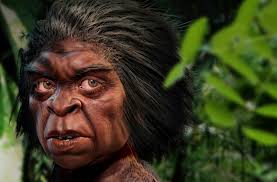
    They talk of searching for the habits and habitat of the Missing Link; as if one were to talk of being on friendly terms with the gap in a narrative or the hole in an argument.

    Image result for java man


    Introduction to the Book of Job


    ....


    For instance, I have pointed out the difficulty of keeping a monkey and
    watching it evolve into a man. Experimental evidence of such an
    evolution being impossible, the professor is not content to say (as most
    of us would be ready to say) that such an evolution is likely enough
    anyhow. He produces his little bone, or little collection of bones, and
    deduces the most marvellous things from it. He found in Java a piece of
    a skull, seeming by its contour to be smaller than the human. Somewhere
    near it he found an upright thigh-bone and in the same scattered fashion
    some teeth that were not human. If they all form part of one creature,
    which is doubtful, our conception of the creature would be almost
    equally doubtful. But the effect on popular science was to produce a
    complete and even complex figure, finished down to the last details of
    hair and habits. He was given a name as if he were an ordinary
    historical character. People talked of Pithecanthropus as of Pitt or Fox
    or Napoleon. Popular histories published portraits of him like the
    portraits of Charles the First and George the Fourth. A detailed drawing
    was reproduced, carefully shaded, to show that the very hairs of his
    head were all numbered No uninformed person looking at its carefully
    lined face and wistful eyes would imagine for a moment that this was the
    portrait of a thigh-bone; or of a few teeth and a fragment of a cranium.
    In the same way people talked about him as if he were an individual
    whose influence and character were familiar to us all. I have just read
    a story in a magazine about Java, and how modern white inhabitants of
    that island are prevailed on to misbehave themselves by the personal
    influence of poor old Pithecanthropus. That the modern inhabitants of
    Java misbehave themselves I can very readily believe; but I do not
    imagine that they need any encouragement from the discovery of a few
    highly doubtful bones. Anyhow, those bones are far too few and
    fragmentary and dubious to fill up the whole of the vast void that does
    in reason and in reality lie between man and his bestial ancestors, if
    they were his ancestors. On the assumption of that evolutionary
    connection (a connection which I am not in the least concerned to deny),
    the really arresting and remarkable fact is the comparative absence of
    any such remains recording that connection at that point. The sincerity
    of Darwin really admitted this; and that is how we came to use such a
    term as the Missing Link. But the dogmatism of Darwinians has been too
    strong for the agnosticism of Darwin; and men have insensibly fallen
    into turning this entirely negative term into a positive image. They
    talk of searching for the habits and habitat of the Missing Link; as if
    one were to talk of being on friendly terms with the gap in a narrative
    or the hole in an argument, of taking a walk with a non-sequitur or
    dining with an undistributed middle.


    ....
     

    Monday, June 29, 2015

    "Missing Link" Still Missing

    Image result for missing link

    Imaginations certainly took flight over Archaeoraptor Liaoningensis, a birdlike fossil with a meat-eater’s tail that was spirited out of northeastern China, ‘discovered’ at a Tucson, Arizona, gem and mineral show last year, and displayed at the National Geographic Society in Washington, D.C. Some 110,000 visitors saw the exhibit, which closed January 17; millions more read about the find in November’s National Geographic. Now, paleontologists are eating crow. Instead of ‘a true missing link’ connecting dinosaurs to birds, the specimen appears to be a composite, its unusual appendage likely tacked on by a Chinese farmer, not evolution.

    "Archaeoraptor is hardly the first ‘missing link’ to snap under scrutiny. In 1912, fossil remains of an ancient hominid were found in England’s Piltdown quarries and quickly dubbed man’s apelike ancestor. It took decades to reveal the hoax." U.S. News & World Report, February 14, 2000

    "Darwin admitted that millions of ‘missing links,’ transitional life forms, would have to be discovered in the fossil record to prove the accuracy of his theory that all species had gradually evolved by chance mutation into new species. Unfortunately for his theory, despite hundreds of millions spent on searching for fossils worldwide for more than a century, the scientists have failed to locate a single missing link out of the millions that must exist if their theory of evolution is to be vindicated." Grant R. Jeffery, The Signature of God

    "There are gaps in the fossil graveyard, places where there should be intermediate forms, but where there is nothing whatsoever instead. No paleontologist . . . denies that this is so. It is simply a fact. Darwin’s theory and the fossil record are in conflict." David Berlinsky

    "Scientists concede that their most cherished theories are based on embarrassingly few fossil fragments and that huge gaps exist in the fossil record." Time magazine, Nov. 7, 1977

    "The evolutionists seem to know everything about the missing link except the fact that it is missing." G. K. Chesterton

    ....